
Route optimization software
Plans multi-stop routes around time windows, vehicle capacity, driver hours and zone rules, and replans when orders change.

Route optimization, demand forecasting, warehouse AI and logistics tech MVPs, built on your own data and constraints and delivered as software your planners will use.
Some logistics problems don't fit a packaged tool. Your delivery zones have rules a generic route planner ignores. Your demand swings with Ramadan, harvest seasons or one large customer's promotions. Your warehouse has a layout and a product mix no slotting module was configured for. Custom logistics AI development builds models around your own data and constraints, then wraps them in software your planners, dispatchers and warehouse staff actually use.
We build route optimization software that accounts for delivery windows, vehicle capacity, driver shifts, COD collection limits and real road conditions from Google Maps Platform. We build AI demand forecasting models that learn from order history, promotions, seasonality and supplier lead times, and show planners why a forecast moved. For warehouses, warehouse AI suggests slotting so fast movers sit close to dispatch, predicts pick volumes for shift planning and, with computer vision, can flag damaged cartons or count stock from photos.
Our closest shipped work is outside logistics, and the engineering transfers directly. Medsuccour is a deep-learning computer-vision model that went from concept to working MVP in about twelve weeks. Vikk is a multi-agent platform built on RAG that serves more than 120,000 users. IWMCRM, our AI-powered CRM for pharma distribution, includes predictive analytics on vendor and product data, which is the same kind of modelling a distributor's replenishment depends on.
Our supply chain AI software development covers the full path: data assessment, model choice, backtesting against your own history, the user interface, integration with your TMS, WMS and ERP, and deployment in your own cloud. You keep 100% of the code and trained models.
Plans multi-stop routes around time windows, vehicle capacity, driver hours and zone rules, and replans when orders change.
Forecasts demand by SKU, location and week from order history, promotions and seasonality, so buyers order with confidence.
Recommends product placement by pick frequency and predicts daily pick volumes for shift planning.
Predicts arrival times from telematics, traffic, dwell history and lane patterns, more reliably than distance divided by speed.
Estimates lane rates from your historical quotes and bookings so your pricing desk responds faster and more consistently.
Flags damaged cartons, checks labels and counts stock from photos taken at receiving or loading.
Solvers for routing and allocation, combined with models that predict demand, ETAs and rates.
Planners can lock stops, move orders or change a forecast, and the system respects their decision.
Every plan and forecast shows the main drivers behind it, so your team can trust or challenge it.
Image models for inspections and counts, and language models for documents and exception handling.
Model, backend, web or mobile app and integrations, delivered by one team.
You own the code, the models and the trained weights.
Using something else? If it has an API, a database or a webhook, we can connect to it.
Models built on your own lanes, zones and constraints produce routes and forecasts your planners actually follow.
Better routes and forecasts cut empty running, expediting and excess stock.
Logistics tech startups get an MVP built to production standards, not a throwaway demo.
Owning the AI at the center of your operation avoids paying rent on it forever.
Medsuccour is an AI-powered project designed to revolutionize the diagnosis of traumatic brain injuries through rapid and accurate analysis of CT scans. Given that every minute counts after a head trauma, our model drastically reduces the time required to detect and localize brain injuries, generating detailed reports in seconds.
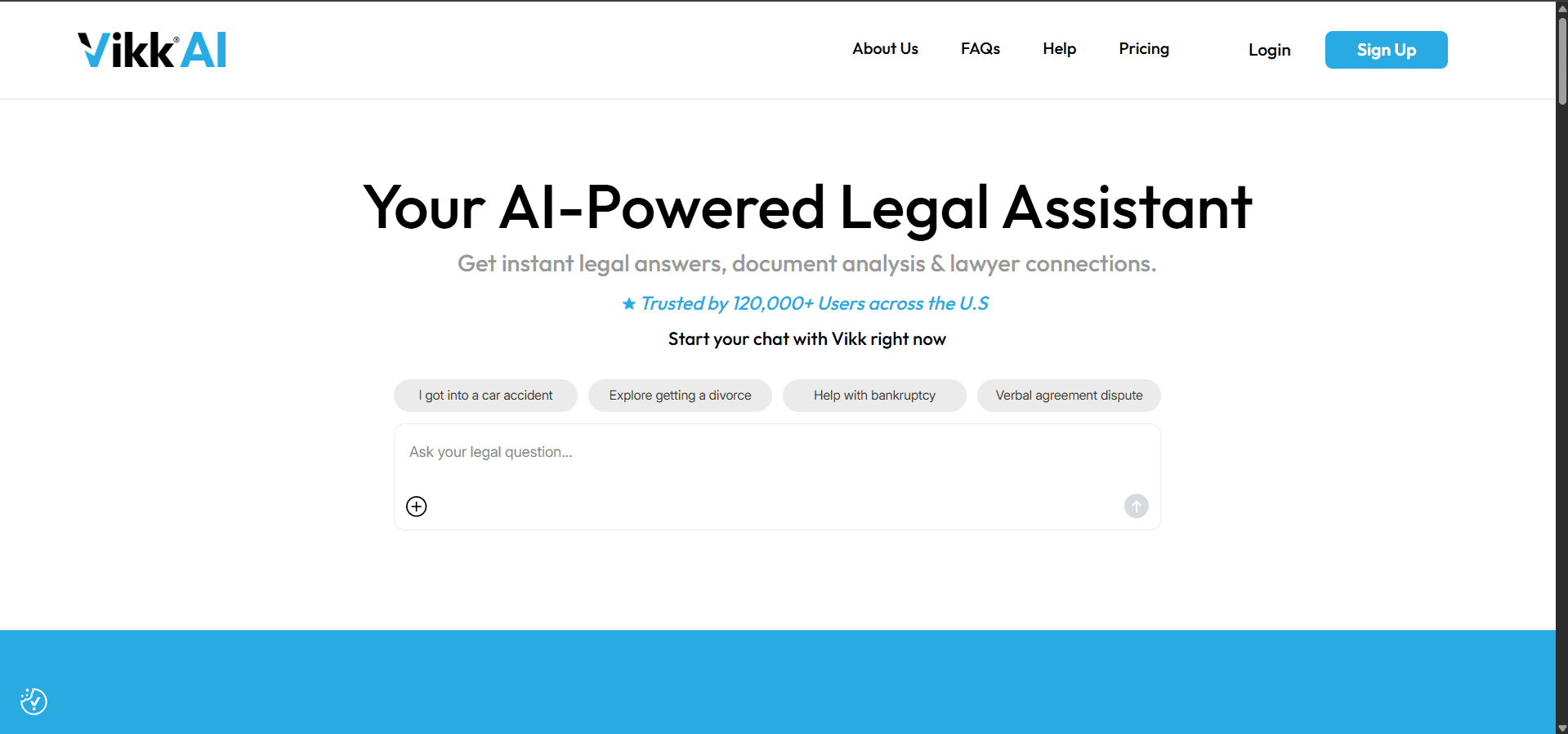
Vikk AI is a 24/7 AI-powered legal assistant that gives users instant, private legal guidance, analyzes their documents, and connects them with verified lawyers when needed. We helped build a conversational platform that delivers state-specific answers across dozens of legal categories and languages.
Yes. We build routing engines that handle your time windows, vehicle types, driver hours and zone rules, with an interface for dispatchers and a driver-facing app if you need one.
It depends on how stable your demand is. A year or more of order history is a good start, and we assess what you have before recommending an approach. Sparse items can be forecast at a group level.
It depends. If a packaged module fits your operation, buy it. Custom makes sense when your constraints, data or product are what set you apart, and we'll tell you honestly which side you're on.
Yes, in most cases. We read stock, location and pick data from your WMS through its API or database exports and push slotting or staffing recommendations back to your team.
Yes. We take logistics AI ideas such as freight marketplaces, visibility tools or dispatch apps to a working MVP with the model, app and backend included.
You do. You keep 100% of the intellectual property, including trained model weights and the data pipelines.
It depends on scope. Our Medsuccour model took about twelve weeks to a working MVP and the Vikk MVP took six. We set milestones after a short discovery phase.
Voice agents for delivery status lines, COD confirmation, carrier check calls and driver dispatch, connected to your TMS and telematics.
Explore AI ChatbotsShipment tracking chatbots for web and WhatsApp that answer status questions, capture quote requests, rebook deliveries and help procurement teams.
Explore AI AutomationFreight document automation, invoice processing and freight audit, order entry and procurement workflows, with people approving the exceptions.
Explore AI Data AnalyticsSupply chain dashboards, fleet analytics, carrier scorecards, demand forecasting and inventory analytics from your ERP, TMS, WMS and telematics.
ExploreBring the routing, forecasting or warehouse problem and the data you have. We'll tell you what's feasible and what it will deliver.