
Fraud detection model development
Models that score card transactions, transfers, account takeovers and application fraud in real time, with reasons your analysts can act on.

Fraud models, credit scoring support, underwriting AI and fintech MVPs, built with the explainability, monitoring and documentation your model risk team will ask for.
Off-the-shelf tools stop where your advantage starts. A lender wants a scorecard that works for thin-file customers in its own market. A card issuer wants fraud models trained on its own transaction patterns. An insurtech founder needs a working product before the next funding round. These are fintech AI development problems: models built on your data, wrapped in software your teams can use, and documented well enough to get through model risk review.
Finance adds constraints that consumer AI ignores. A credit model has to give reasons, because applicants and regulators will ask why someone was declined, and in the US fair-lending rules require lenders to state specific reasons for an adverse decision. A fraud model has to respond in milliseconds and be watched for drift as fraud patterns shift. Every model needs validation evidence, monitoring and a clear owner. We build with explainable features and reason codes, keep data and model versions traceable, test for bias, and design the workflow so a credit officer, underwriter or fraud analyst makes the final call.
Our published work in other demanding fields shows how we build. Vikk AI is a multi-agent legal assistant built on LLMs and RAG, covering all 50 US states and 50+ legal categories, with document analysis and handoff to lawyers. Its MVP took six weeks and it has 120,000+ users. Medsuccour is a deep-learning model that reads head CT scans in seconds, where a specialist needs 15 to 20 minutes. What transfers to finance is the discipline: grounded answers, careful evaluation and a person who signs off.
You own the code, the models and the trained weights, and we can deploy inside your own cloud account or region.
Models that score card transactions, transfers, account takeovers and application fraud in real time, with reasons your analysts can act on.
Scorecards and machine-learning models with reason codes that support, not replace, credit officers, including for thin-file and SME borrowers.
Summarize submissions, extract risk factors and suggest follow-up questions, while the underwriter prices and accepts the risk.
A staff assistant that answers from your policies, procedures, product manuals and regulator circulars, with a link to every source.
Take a lending, payments, wealth or insurance product idea to a working MVP with the model, app and backend included.
Pulls the customer profile, transaction history and related alerts into one view and drafts case notes for the analyst to edit and file.
Every score comes with the factors that drove it, in language a credit officer or customer can understand.
We test outcomes across customer groups and document the results, so fair-lending and fair-treatment questions have answers.
Language AI grounded in your documents for knowledge assistants, document analysis and investigation support.
Model cards, data lineage, validation results and change logs ready for your model risk management and audit reviews.
Ongoing checks catch shifts in fraud patterns, customer mix or data quality before they hurt results.
You own the code, the models and the trained weights, with no licence tied to our platform.
Using something else? If it has an API, a database or a webhook, we can connect to it.
Trained on your own portfolio and market, rather than a generic vendor model built for someone else's.
Documentation, explainability and monitoring are built in from the start, not bolted on when validators ask.
MVPs built to production standards, so pilots with real customers can start without a rebuild.
Owning core models avoids per-decision or per-seat fees for the capabilities your business depends on.
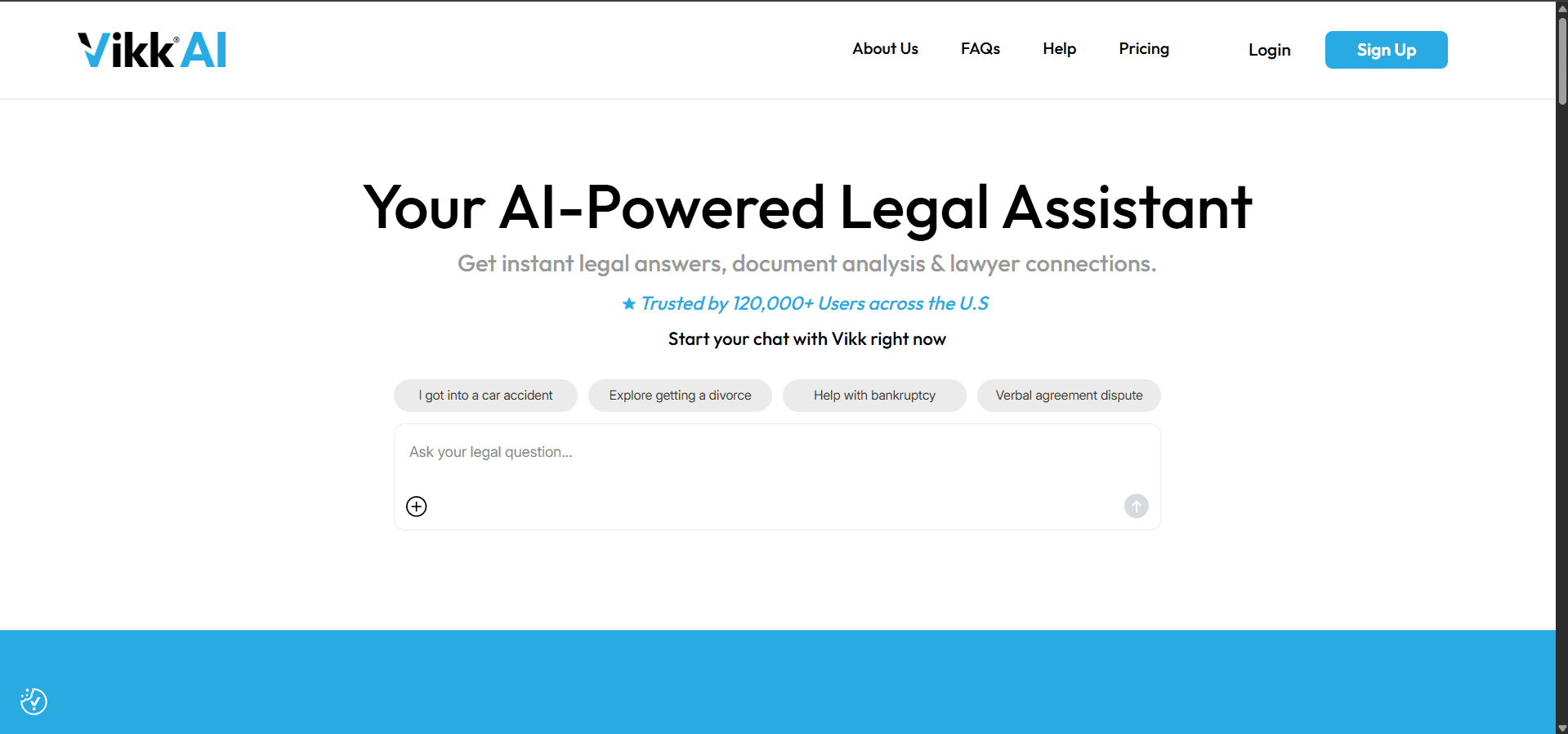
Vikk AI is a 24/7 AI-powered legal assistant that gives users instant, private legal guidance, analyzes their documents, and connects them with verified lawyers when needed. We helped build a conversational platform that delivers state-specific answers across dozens of legal categories and languages.
Medsuccour is an AI-powered project designed to revolutionize the diagnosis of traumatic brain injuries through rapid and accurate analysis of CT scans. Given that every minute counts after a head trauma, our model drastically reduces the time required to detect and localize brain injuries, generating detailed reports in seconds.
Yes. We build supervised and anomaly-detection models on your transaction and customer history, deliver risk scores with reasons, and connect them to your fraud case management so analysts review the flagged cases.
It depends on the market and how it's used. Most regulators expect credit models to be explainable, tested for unfair bias and overseen by people, and some require specific reasons for declines. We build to those expectations and keep the final decision with your credit team.
We prefer interpretable features and models where they perform well, add reason codes to every score, and document data sources, validation results and known limits. Your validators get the evidence they need to challenge the model.
Yes. We take product ideas to working MVPs with the AI, app and backend included. Our Vikk AI MVP, a multi-agent assistant in the legal field, took six weeks from start to launch.
It depends on the decision and how often the outcome occurs. Fraud and default are rare events, so we look at history length, labelled outcomes and data quality first, and tell you honestly whether a model, a rules engine or both is the better start.
You do. You keep 100% of the intellectual property, including trained model weights and documentation.
Focused AI features can ship in weeks, and the Vikk AI MVP took six. Models that need validation and integration into origination or fraud systems take longer. We set milestones after discovery.
Voice agents for bank and insurer contact centers: card blocks, balance and policy queries, claims intake, payment reminders and collections calls, with human handoff.
Explore AI ChatbotsBanking, fintech and insurance chatbots for web, app and WhatsApp that answer product questions, pre-qualify leads, collect documents and escalate safely.
Explore AI AutomationKYC, loan processing, claims intake, underwriting extraction and renewal workflows, automated end to end with human approval on every decision.
Explore AI Data AnalyticsDashboards, risk analytics and forecasting for banks, lenders and insurers, built on clean data from core, policy, CRM and contact-center systems.
ExploreBring the decision you want to improve and the data you have. We'll tell you plainly what a model can do, how it will be explained and how long it takes.