In-app voice assistant
Users talk to your product instead of clicking through it, and the assistant runs actions through your API with their permissions.

Add real-time voice to your app or platform: conversations that respond fast, handle interruptions and call your product's own APIs. Built on the voice stack that fits your latency and cost targets.
Voice is the feature users ask for and teams underestimate. Wiring a speech-to-text API to a language model and a voice takes an afternoon. Making it feel like a conversation takes real engineering: answers that start fast, a user who can interrupt mid-sentence, accents and background noise, and a cost per minute that still leaves you a margin. Voice AI development for SaaS is the work of getting all of that right inside your product.
We build voice in two shapes. The first is voice inside your app: a coach, tutor, sales trainer or hands-free assistant that users talk to on web or mobile. The second is voice as a feature you sell: AI phone agents your customers configure in your dashboard to answer their calls, book meetings or qualify leads. Both run on streaming speech recognition, a language model with access to your product's tools, and natural speech synthesis, connected through your APIs so the agent can actually do things.
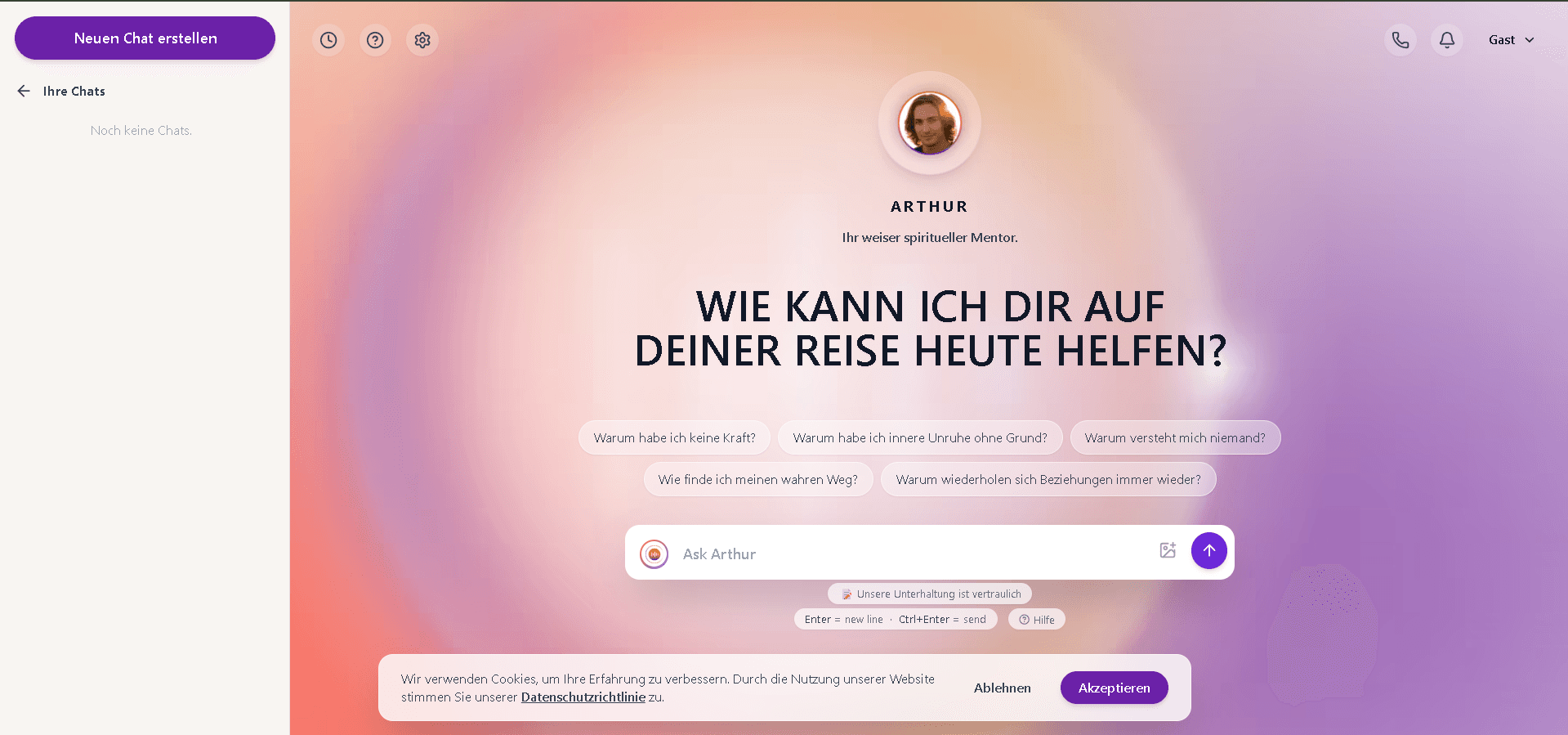
We have shipped this before. Arthur is a text and real-time voice AI coach built on 30+ books, working in English and German and used by thousands of women. The same patterns apply to your product: low-latency streaming, turn-taking that handles interruptions, multilingual speech and transcripts your team can review. We pick the stack per project, whether that's a managed voice platform like Vapi, an open framework like LiveKit, or Twilio for phone numbers, and we model the per-minute cost before you commit.
Users talk to your product instead of clicking through it, and the assistant runs actions through your API with their permissions.
Let your customers set up AI agents that answer their calls, book appointments or qualify leads, managed from your dashboard.
Role-play, coaching and practice conversations that respond in real time, like the voice mode we built for Arthur.
A working voice prototype on a real number or in a real app, fast enough to test with pilot users and show investors.
Transcribe sales, support or onboarding calls and turn them into summaries, action items and CRM updates.
Serve users in English, Arabic, German, Urdu and other languages from one voice agent that detects and switches language.
Each stage streams, and we measure end-to-end response time so conversations don't feel laggy.
Users can cut in mid-answer, the way they would with a person, and the agent responds to what they just said.
The voice agent uses the same APIs and permission checks as your app, so it can act, not only talk.
Each customer gets their own prompts, voice, knowledge and phone numbers, isolated from every other tenant.
English, Arabic, German, Urdu and many more, with language detection and switching mid-conversation.
Usage is metered by tenant and feature, so you can price voice profitably and spot expensive patterns early.
Using something else? If it has an API, a database or a webhook, we can connect to it.
Voice is a visible upgrade you can package as a premium tier or add-on.
We've already solved the latency, turn-taking and telephony problems, so you skip months of trial and error.
Cost per minute is modelled before the build and tracked after launch, so voice doesn't quietly eat your gross margin.
We design the voice layer so speech, model and telephony providers can be swapped as prices and quality change.
You connect three streaming pieces: speech recognition, a language model with access to your app's functions, and speech synthesis, plus a real-time transport such as WebRTC. The hard part is tuning latency and interruptions, and making the agent call your APIs safely. That's the work we do.
It depends on your volume and how much control you need. Managed platforms like Vapi get you live fastest, while LiveKit and a custom pipeline give more control over cost and data at scale. We recommend one after looking at your use case and expected minutes.
It depends on the speech recognition, language model, voice and telephony providers you choose, and on how long the conversations run. We model the per-minute cost for your traffic before the build so you can price the feature with confidence. Book a call and we'll walk through it.
Fast enough to feel conversational when it's built well. We stream every stage, keep prompts and tool calls lean, and measure response time on real calls rather than relying on provider benchmarks.
Yes. Arthur runs real-time voice conversations in English and German, and we build agents in Arabic, Urdu and many other languages, with switching mid-call where it's needed.
It depends on where you call. In the US, the TCPA restricts automated and artificial-voice calls without prior consent, and in the EU and UK, GDPR governs call recording and personal data. We build consent capture, disclosure and opt-out handling in, and your legal team confirms the final rules.
Usually a few weeks for a focused agent on one workflow. Multi-tenant configuration, telephony for your customers and usage billing add time. We set a timeline after discovery.
In-app AI assistants, support chatbots and onboarding guides grounded in your docs and each customer's own data.
Explore AI AutomationAI agents and workflow automation for support triage, customer success, revenue operations and internal SaaS operations.
Explore Custom AI DevelopmentAI MVP and AI SaaS development: LLM apps, RAG products, multi-agent systems and custom models, built by one team from model to UI.
Explore AI Data AnalyticsSaaS metrics dashboards, product analytics, churn prediction and AI usage and cost analytics built on Stripe, product events and your database.
ExploreTell us where voice fits in your product. We'll show you a working voice agent and the per-minute numbers behind it.